Stop the "insane"(ity)
The use of "insane" is insane

I follow random creators all the time. I imagine a nefarious someone (or computer) trying to figure me out just based on my YouTube data. Exotic birds and cold cases and carpet cleanings and vintage concert footage.
One of these is a toxicologist and his monthly true-life medical horror stories. Been hooked for years. His channel offers just the right balance of mystery, weirdness, the macabre, and a satisfying, if not always happy, conclusion. Often I watch these before sleep (and wonder why I struggle with insomnia).
I actually congratulated myself somewhat for partaking of these vignettes (and occasionally watching an in-depth probe into the science behind them). He’s smart. A little quirky. So random. I learn things. Expanding my mind and all that. Then it happened.
The fall from grace.
The titles for six of his posts since the beginning of May have the word “insane.”
This was already bothering me generally, but it was the final straw. The word is everywhere, being used in all kinds of clickbait-y, stupid ways. How could he? Can I ever watch him again? That’s how strongly I feel about this.
Pretty dramatic, I know. And why was I already triggered about all this? See these news examples from just this last week:
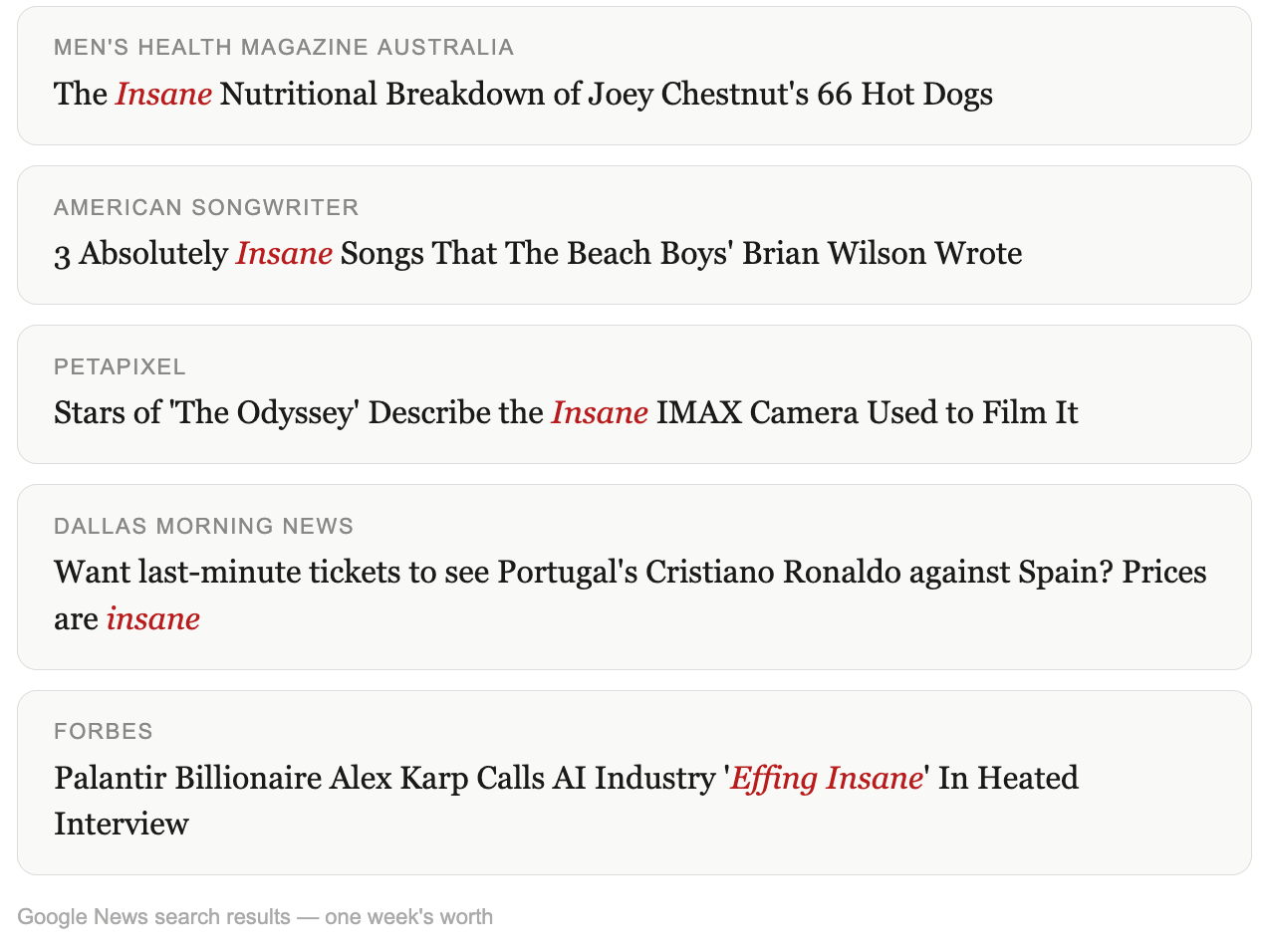
And yes, Karp actually said that. That makes it worse. He’s a billionaire CEO and only two years younger than me. I don’t know why the age thing makes a difference, but it sure seems like it should.
Here’s the real story, though. What we have here, folks, is a culture of hyperbole. “Insane” is just a piece of this puzzle. Others, in their specific categories:
Mental illness family: crazy, nuts, bonkers, unhinged, deranged, unreal
Destruction family: cooked, destroyed, obliterated, wrecked, demolished, shredded [as a skier, I take particular umbrage here], eviscerated, annihilated
Intensity amplifiers: absolutely [yikes… I do this all the time], literally, utterly, wildly
Doom phrases: “it’s over,” “we’re cooked,” “nobody is talking about this,” “this changes everything”
Superlative inflation: epic, iconic, legendary, jaw-dropping, mind-blowing, devastating, brutal, savage
Academics study clickbait and its trends. I love that.
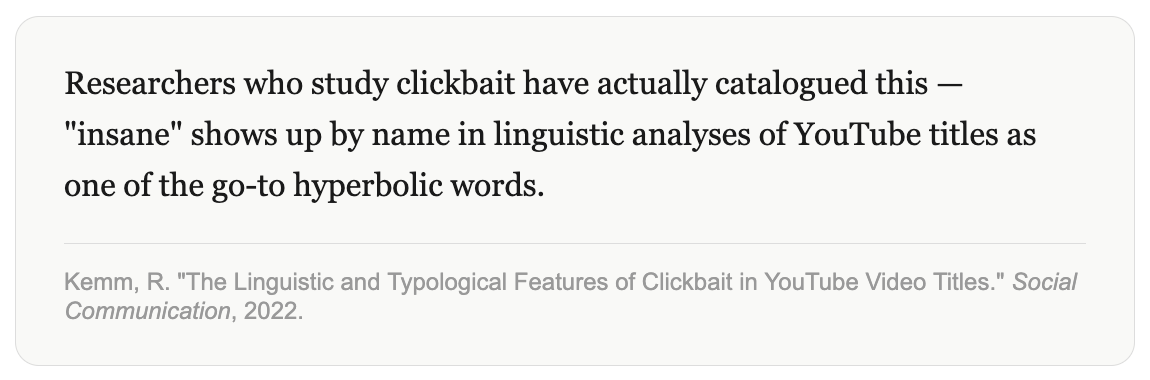
So those are some data points. But here’s my take.
My toxicologist may not have chosen “insane” consciously. He has millions of subscribers. YouTube’s A/B testing picks the most alarming title automatically (because, of course it does), and creators often have editors/social media managers who apply clickbait instincts (because they work). He may have looked at revenue and decided in favor of the buck.
The algorithm is the real villain.
Yet these varying uses of “insane” are a bastardization of language. Also worth noting: people who have experienced mental health struggles are triggered by those terms, whether in the right context or not. I mean, when is it really right to call someone “insane,” except in a courtroom? All I know is, nutritional breakdowns aren’t insane. Songs are never absolutely insane. An IMAX camera? Not insane. And prices? Well… hmm. Another topic.
Who am I to judge? After all, I’m creating. I’m building an audience and learning just how much clicks matter. They determine if someone sees your work, if you can make a couple of bucks doing it, if you’re reaching your people. And I want so very much to reach my people. Not for popularity or millions of followers. I’ve experienced deep connection through others’ words on a page. I’d like to help others understand they are not alone in some things.
So yeah, I watched the algorithm eat someone I trusted, but it reaches its grubby hand for me too. I used “insane” three times in my title and subtitle, but it’s warranted for what I’m saying. But what if just those three uses dramatically improve my readership? Would my standards change?
I would like to think not. But maybe others have said that, too.
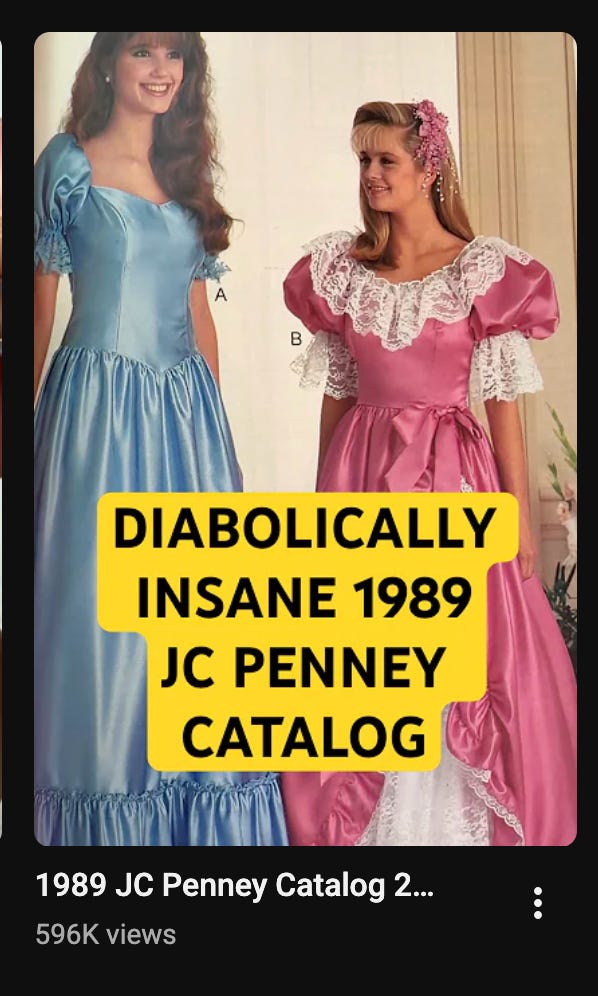
Urgent update: Found this on YouTube tonight. They've escalated. We're cooked.