
The things she carries
And learns to drop


My college forays into English literature engendered a deep love for the short story. Don’t get me wrong, I revere Don Quixote, The Divine Comedy, and Middlemarch, but they were torture. My short attention span felt legendary, long before I was diagnosed with ADHD. Short stories were such a relief: immerse myself, get lost in the intensity required by short form (Joyce Carol Oates, anyone?), and experience the happy or tragic, instructive or cautionary, whatever, and sleep that night. Longer works, even now, bring me to my knees. I obsess and lose myself in negative ways, like researching footnotes, cancelling appointments, ignoring friends, pulling all-nighters.
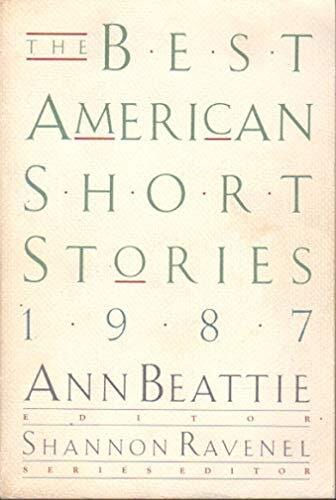
A favorite short story is Tim O’Brien’s The Things They Carried, often-anthologized and ultimately included in his 1990 collection of the same name. I had read it earlier in the above anthology from 1987, since the story first appeared in Esquire (1986).
A Wikipedia blurb calls O’Brien’s collection a “meta-fictional Vietnam War memoir.” I’m embarrassed to say this term is new to me. British scholar Patricia Waugh’s definition, from 1984:
Metafiction is a term given to fictional writing which self-consciously and systematically draws attention to its status as an artefact in order to pose questions about the relationship between fiction and reality. In providing a critique of their own methods of construction, such writings not only examine the fundamental structures of narrative fiction, they also explore the possible fictionality of the world outside the literary fictional text.
—Patricia Waugh, Metafiction: The Theory and Practice of Self-Conscious Fiction (1984)
Mind blown. And I will return to this later.
Meanwhile, O’Brien’s work hit me hard. The messages of survival in extreme difficulty and the phrase “boom down” stayed with me, long after the first reading. I picked up the story again recently, and I now believe it wasn’t an accident. In fact, I had already begun this Substack post, but the title and subtitle were as far as I got. A short time later I found myself in an ER with a life-threatening condition. The experience changed me profoundly. I won’t bother you, dear reader, with every detail. But I will tell you this:
With too much effort and for far too long, I carried things that weren’t mine to carry.
I was already kind of thinking of this idea, but the illness crammed it home, forcefully, without mercy or asking for my input. Yes, I can be stubborn, and regrettably I only rethink my notions when circumstances beyond my control make me. This became one of those times. I had no choice but to put things down, to let go. My broken body and my “bad-addled brain”—thank you, Cat in the Hat—demanded nothing less.
Here’s my story, in second person narrative because I’m feeling a little Bret Easton Ellis. But seriously, second-person narrative is useful when I’m recounting fresh trauma.
You know you must be quite sick, because every morning your Apple watch warns about “outliers” in your vitals overnight: wrist temperature (high), respiratory rate (fast), sleep duration (short). Since you normally freak out about every little thing, this time you are going to be strong. Though your watch has never yelled at you like that before, your body is working, right? That high fever even with ibuprofen and acetaminophen together, it means you’re healing. Fever is the body’s way of killing things, right? It’s the weekend. You’re not going to bother doctors or friends or anyone. Your feelings of dread are just anxiety. You don’t remember the last time you had a fever over 103, but that’s what the body does.
And no other visit to the ER has been as serious as you thought it would be. Your two Covid-19 tests are negative. It’s alllll good.
However…
After days of this, today you know something’s off. Something other than your brain is telling you it’s urgent. Every cell in your body is telling you. You text a few people to gauge their availability to take you to the hospital without giving any hint that’s what you need (and people are busy). You pause only briefly before your cells drag you to your shoes, keys, door. You drive yourself, knowing full well it’s not safe, so you take the backstreets and pray the whole way you’ll arrive in one piece without hurting anyone.
Waiting in the ER, you shake uncontrollably. You tell someone, realizing that just the walk to convey this info has shown you you shouldn’t be walking. You are ready to pass out and kind of want it to happen.
They give you a wheelchair, but your shaking worsens. Your brain is checking out. Wait, this is different. What’s happening? You’re scared. Deep fear takes root in your belly, your heart. Your mind is gone.
Suddenly you’re on a gurney. Blood is taken and swabs are shoved into your nostrils, touching your brain. (You never go this deep at home). Why are two doctors looking alarmed but speaking professionally? Someone is taking blood again, this time in fancy glass bottles. What the heck is going on?
You are told, very professionally, that you have sepsis. (Wait, your dear friend Eva died of sepsis…) Oh yeah, and you have Covid-19.
In record time you are in a private room. Quarantine. Everyone is asking you about your advance directive. What? You’re only 60. You still haven’t fully grasped the gravity of your situation. And now you are repeating yourself, within the same sentence, why? You look at your vitals on the machines…everything is haywire. Blood pressure is so low. Alarms go off. Someone injects you in your belly. They’re telling you what they’re putting into the IV in your arm, but you can’t retain information. (But wait, Eva died of sepsis…) You stand up to go to the bathroom and you are completely incontinent, two steps and you flood the room. You are extraordinarily dizzy. Why is everyone talking so fast and using big words? English, right? Why can’t you follow?
Do you want us to call someone? …and who would that be? heck no. won’t bother anyone.
Stop asking me about my advance directive. I don’t have one. I already said that! To everyone… Why is the doctor saying he’s trying to keep you out of intensive care?
… Hold on… Wait. Wait!! It seems bad. Are you reading that right? Too fast…can’t follow.
One brain cell knows, with horror… no control. Your body, what it’s doing to itself, what people are doing to it, who’s doing it, and, because no advance directive, what happens when you for sure can’t... oh no
Nurses use sing-song, oh-honey, she’s-already-gone voice. Damnit, I’m still here! … so offended and so powerless.
blur…
Mad-cry at doctor… muddled thoughts… must ask… can’t. gasping sobs. brain and voice just not...
blur…
Answer call from son… he’s tried for days... what’s wrong mom… sick sepsis covid I can’t… talk… please you talk... Listen, like never before… because you can’t… he’s doing well… scared for you… loves you.
he knows you’re here now… no one else… because you can’t.
purest isolation.
blur…
here we are… stronger antibiotic… IV… okay? advance directive… no?
are you dying…
blur…
You, dear reader, can probably imagine the rest.
I lost a chunk of my awareness, which has been so strange. Like waking up after being black-out drunk and wondering why my TV is upside down on the floor and who put me in my jammies. And why no roommates are willing to tell me what happened.
After returning home, I opened my purse and the rarely-used little notebook therein. I found hieroglyphic scratchings of symptoms, complaints, and frustrations for confronting my poor doctor. I must have written them, but I felt a distinct unease reading someone else’s notes. That couldn’t have been me!? Did I send those garbled, incoherent texts and leave a voicemail requesting meals from my church? Somewhere, my brain remembered this was an option and could help.
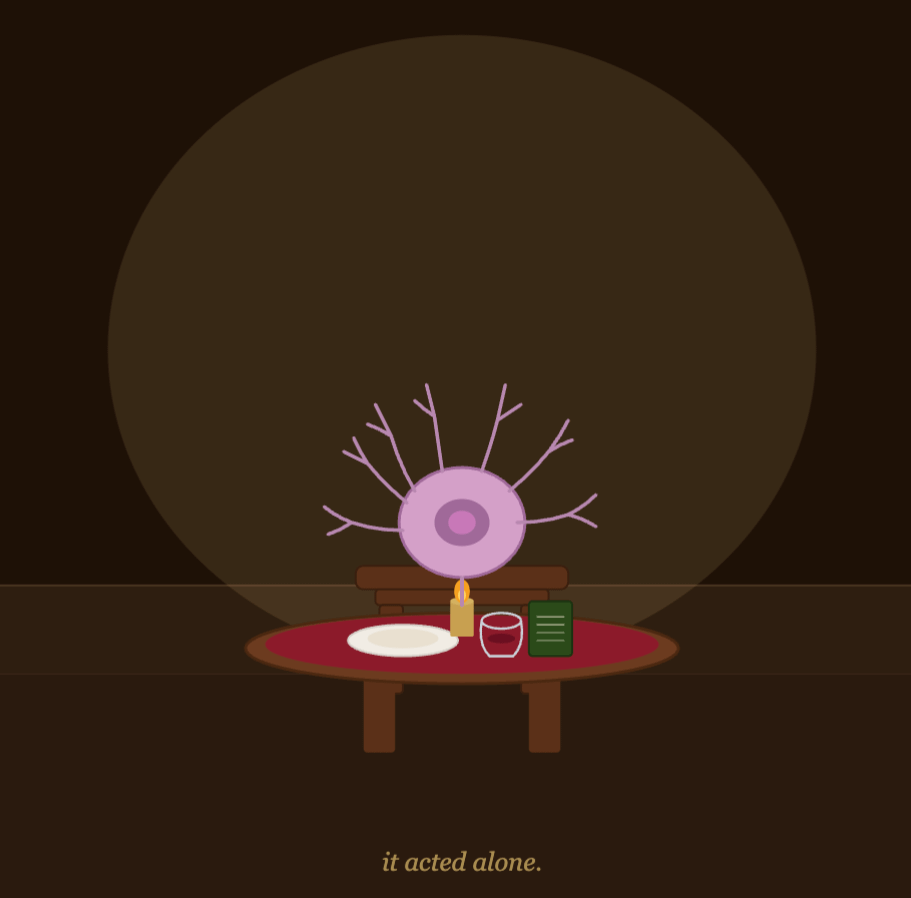
I want to take that one brain cell out to dinner for holding on to some rational things. It acted alone.
I used to leave hospitals feeling well enough (childbirth, knee surgery, hysterectomy, sinus surgery). I had my faculties, if not energy or mobility.
More surprises followed. I guess I researched my plight from my hospital bed; I later found tabs open on my phone about sepsis, aftermath of sepsis, post-sepsis syndrome, post-covid syndrome, advance directive. I’ve already made an appointment to take care of the last thing. And the two syndromes? They are my new, unwelcome companions. My energy and crazy blood work have improved at a snail’s pace, but I’m still weak: I’d say about 80%, roughly 6 weeks after. Cognition, about 70%. I used to fret over memory lapses before. I had no idea the terror of real, blackout memory voids. I still lose track of my thoughts, my topic, my point mid-sentence. I can’t conjure beloved, familiar words. I say something, then ask if it makes sense because it doesn’t sound right. I’m grateful for writing. Here, I can check and recheck and take longer than usual and ask ChatGPT if something makes sense and no one has to know (except now you do). It’s possible my brain will never come fully back online.
The only other time I had Covid-19, last October, was an entirely different experience. This time I had no respiratory symptoms at all. When they told me I was positive, I honestly thought they had screwed up the test. I now know better. Research taught me about the particularly virulent strain in my region, something I had heard on the news and forgotten. I’m humbled to say I previously knew nothing about post-covid syndrome. Now I know enough to scare me. With the sepsis, I have a double whammy. Neither syndrome promises full recovery. I’ve come to accept that, more readily than I ever would have before. It is what it is.
I said earlier that “boom down” stayed with me long after the first reading. It turns out O'Brien was writing about more than war.
“Kiowa, who saw it happen, said it was like watching a rock fall, or a big sandbag or something just boom, then down—not like the movies where the dead guy rolls around and does fancy spins and goes ass over teakettle—not like that, Kiowa said, the poor bastard just flat… fell. Boom. Down. Nothing else.”
—Tim O’Brien, The Things They Carried (1990)
Note: Read a past experience in this same vein at my other Substack: My Minivan Smelled Like Fries and Regret.